






"Cyberpunk & Witcher Devs: Crafting Choices That Matter"
CD Projekt Red is renowned for crafting exceptional games. Celebrating its 10th anniversary, The Witcher 3 remains a standout title, often hailed as one of the greatest RPGs of all time. Meanwhile, Cyberpunk 2077—bolstered by significant updates—has evolved into a richly detailed open-world RPG. These achievements have cemented the studio's reputation as a global leader in game development, alongside its other compelling releases. But what sets CD Projekt Red's games apart from the competition?
The secret lies in how smaller elements seamlessly intertwine to form a cohesive and immersive experience. CDPR excels at making player choices feel meaningful, with narratives, worlds, and characters dynamically responding to decisions. While many RPGs follow this blueprint, few execute it as effectively as CD Projekt Red.
"When I play other AAA RPGs, I often sense the constraints of their development tools," says Patrick Mills, CDPR's franchise content strategy lead. "You can see the designers' vision but also where it falls short. Many players assume this is due to lazy development or poor design—when in reality, it's often a matter of technical limitations."
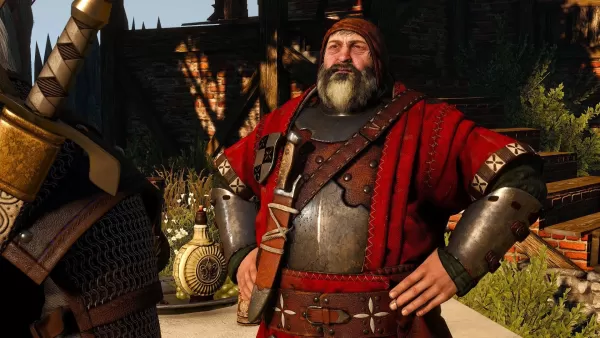
CD Projekt Red has invested as much effort into refining its tools as crafting games. Most of its RPGs utilize REDengine, a proprietary toolkit refined over four iterations to achieve the studio's ambitious designs. These tools enable interconnected gameplay systems where player actions carry tangible weight.
Later REDengine versions also allowed for bolder quest designs. The Witcher series balanced exploration, dialogue-driven storytelling, and combat, while Cyberpunk 2077 expanded into deeper character customization—accommodating diverse playstyles like stealth and hacking. The Phantom Liberty expansion pushed this further, blending genres like survival horror into its narrative.
"For large-scale RPGs, variety isn't just beneficial—it's essential," says Miles Tost, CDPR's level design lead. "Players need fresh experiences to stay engaged. Even the best story can't sustain interest if gameplay grows repetitive."
Yet storytelling remains central to CDPR's formula. Each quest features an unexpected twist—killing bandits who raided a village isn't compelling unless the story takes an unforeseen turn. The studio conducts "destruction testing," where playtesters attempt every conceivable approach, allowing designers to refine quests for maximum player agency.
Cyberpunk 2077's open-ended design compounds this complexity. Every cybernetic upgrade, weapon choice, and skill investment alters how players interact with Night City. Developers must account for countless possibilities—stealth, brute force, diplomacy, and emergent strategies they never anticipated.
But CDPR is best known for consequential narrative choices rather than gameplay systems. While BioWare pioneered branching stories in games like Mass Effect, CDPR has arguably perfected them with morally ambiguous dilemmas in The Witcher and Cyberpunk series. Consequences often unfold gradually, preventing save-scumming and heightening emotional impact. Major decisions can trigger character deaths, political shifts, or romantic developments.
"We ensure players understand each choice's context beforehand," explains Paweł Sasko, associate game director. "By the time they decide, they grasp the implications and feel accountable for the outcome."

This meticulous design encourages nuanced reactions. "A 'good' choice might backfire, while a 'bad' one could be justifiable based on priorities," says quest designer Paweł Gąska. Phantom Liberty exemplifies this—players must choose between helping Songbird escape or surrendering her to Reed, with neither option clearly superior.
"We want every outcome to feel rewarding, even if it's bittersweet," adds Sebastian Kalemba, game director on the next Witcher title. "When consequences align with the emotional journey, players accept them as meaningful."
Some of CDPR's choices have become legendary. The Witcher 3's Bloody Baron arc and Phantom Liberty's ending rank among its finest, but The Witcher 2's mid-game faction choice remains unparalleled—aligning with either Roche or Iorweth drastically reshapes the story.
"Resource allocation, not fear of missed content, limits such ambitious branching," clarifies Tost. "Creating two distinct storylines is akin to developing separate games." Open-world design further complicates this approach, though expansions like Blood and Wine and Phantom Liberty reintroduced significant branching paths.
Initially, Cyberpunk 2077's choices fell flat. "We built consequences into quests structurally, but they lacked impact," admits Mills. The team realized their subtlety didn't translate in Night City's dense environment. Unlike The Witcher 3—where revisiting locations highlighted consequences—Cyberpunk's structure obscured results.

This lesson shaped Phantom Liberty's more overt causality. Yet technical execution is only part of the equation. "Designers devise dilemmas, but writers and animators make them resonate," notes Gąska, comparing choices to real-world ethical quandaries—without emotional stakes, they remain abstract.
"We mirror life's uncertainty," says Kalemba. "You can't foresee every outcome, but your decisions shape the journey. We challenge players to embrace this philosophy."
While The Witcher 4 will build on past successes, CDPR aims to push boundaries further. However, transitioning from REDengine to Unreal Engine 5 introduces new challenges. "Expansion development often feels more rewarding than base games because unknowns become solutions," says Tost. "We need to replicate that clarity earlier in production."
"Player agency remains our focus," Kalemba emphasizes. "We're expanding The Witcher's legacy by offering more tools—both narratively and mechanically—so players truly shape their experience."
Matching The Witcher 3's depth would already be monumental, but evolving beyond it requires solving complex creative puzzles. Cyberpunk 2077's rocky launch proved even masters of branching narratives can stumble. Phantom Liberty demonstrated recovery, yet The Witcher 4 will be the ultimate test of lessons learned. Here's hoping Ciri's next adventure solidifies CDPR's legacy as the studio that genuinely respects player choice.
-
 Dec 25,24Zenless Zone Zero 1.5 Update Preview Zenless Zone Zero Version 1.5 Update: Leaked Banner Characters Revealed New leaks for Zenless Zone Zero unveil the character lineup for the upcoming Version 1.5 update, including highly anticipated character reruns. This HoYoverse action RPG continues to expand its roster of powerful characters, fr
 -
 May 06,25Magic Chess: Beginner's Guide to Mastering Core Mechanics Magic Chess: Go Go, an exhilarating auto-battler strategy game crafted by Moonton, is deeply rooted in the vibrant universe of Mobile Legends. This game masterfully blends chess tactics with hero-based strategies, offering players the chance to craft formidable team line-ups featuring heroes from th
 -
 Apr 08,25Top Free Fire Characters 2025: Ultimate Guide Free Fire, crafted by Garena, has cemented its status as a top-tier battle royale game worldwide, amassing over 1 billion downloads on the Google Play Store and engaging millions of daily active players. Its appeal lies not only in its thrilling gameplay but also in its diverse array of characters,
 -
 Jan 18,25Roblox Grace: All Commands and How to Use Them Grace 游戏指令速查 所有 Grace 指令 如何使用 Grace 指令 Grace 是一款 Roblox 游戏,玩家需要在充满恐怖生物的各个关卡中生存。游戏极具挑战性,需要玩家快速反应并寻找对抗敌人的方法。幸运的是,开发人员添加了测试服务器功能,玩家可以使用聊天指令来简化游戏,召唤敌人,或进行游戏测试。以下列出了 Grace 游戏中的所有指令以及使用方法。 所有 Grace 指令 .revive:复活指令,用于在失败或卡住时重新进入游戏。 .panicspeed:修改计时器速度。 .dozer:召唤 Dozer 实体。 .main:进入主分支服务器。 .slugfish:召唤 S