






Why 'Flow' is a Must-Watch Animated Film That Won the Oscar Despite Its Tiny Budget
The Latvian animated film Flow, directed by Gints Zilbalodis, stands as a 2024 cinematic triumph, defying expectations with its originality and impact. This groundbreaking film has garnered over 20 international awards, including a Golden Globe, and achieved a historic milestone as the first Latvian production to win the Oscar for Best Animated Feature.
Set in a breathtaking, post-apocalyptic world devoid of humanity, Flow follows a resourceful cat and other animal survivors facing an imminent global flood.
Table of Contents
- What Makes Flow Extraordinary
- The Open-Ended Conclusion
- Authentic Animal Sound Recording Challenges
What Makes Flow Extraordinary
Flow's brilliance lies in its use of animals to explore complex human traits and social dynamics. The cat embodies adaptability and resourcefulness; the capybara, balance and calm (though also highlighting the dangers of complacency); the secretary bird, strong leadership; the labradors, youthful energy and the need for connection; and the lemur, a critique of consumerism. These characters create a rich tapestry of relatable personalities for both children and adults. Zilbalodis himself draws parallels between his team-building experience and the cat's journey of learning trust and collaboration.
Released amidst global pandemic and political unrest, Flow resonates with contemporary anxieties about survival, cooperation, and environmental concerns. The film's lack of dialogue and human characters invites diverse interpretations. The ambiguous details—like boats hanging in trees—hint at previous floods and possible evacuations, sparking audience speculation. The enigmatic secretary bird raises questions about perception and reality, leaving its nature open to interpretation (divine intervention, hallucination, or simply a strong leader).
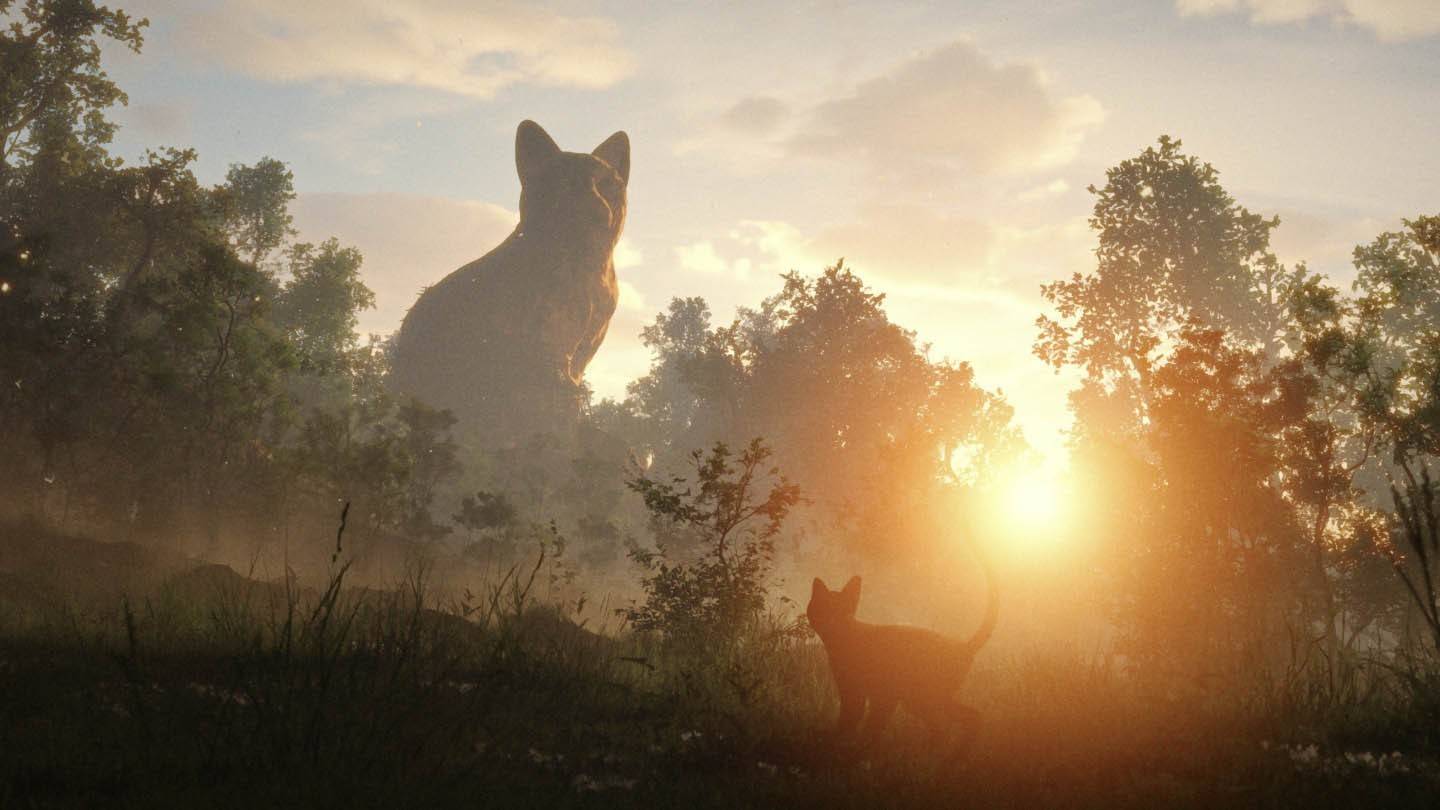 Image: ensigame.com
The Open-Ended Conclusion
The film's open ending leaves viewers contemplating various possibilities: Will the characters find new ways to coexist post-flood? How will their relationships evolve? What survival and community lessons can we glean from their experiences? This layered narrative allows for deeply personal interpretations.
Unique Animation Style
Flow's visual style departs from traditional animation, employing a distinctive aesthetic that enhances its narrative. Inspired by watercolor and video game design, the animation achieves a dreamlike quality perfectly complementing the film's themes. Unlike high-budget animations with sharp lines and rapid editing, Flow's smooth transitions and extended shots fully immerse the audience, creating moments of cinematic magic, such as unbroken camera movements across vast landscapes.
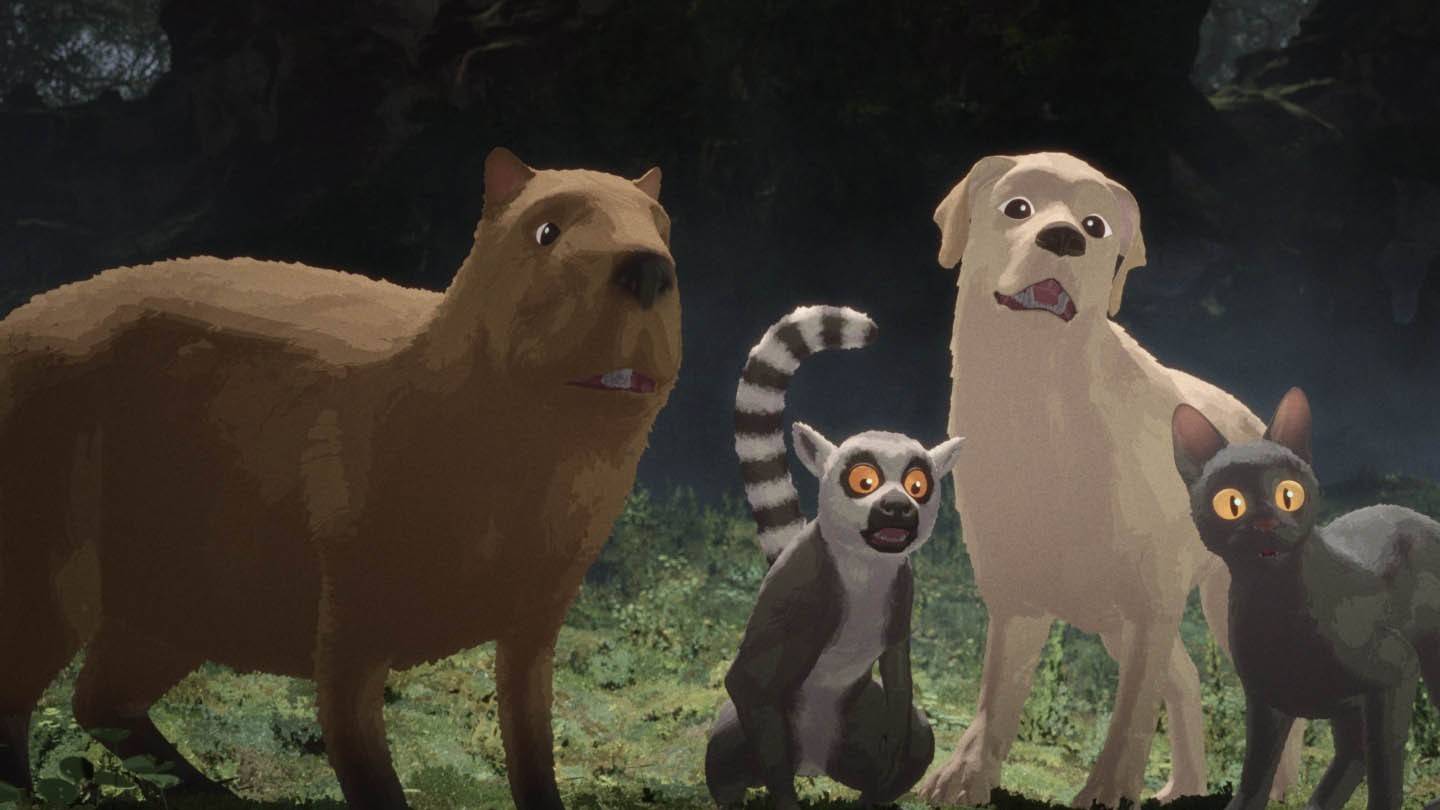 Image: ensigame.com
No Words Needed
Flow masterfully demonstrates that compelling storytelling doesn't require dialogue. Through body language, facial expressions, and a natural soundscape, the film effectively communicates emotions and relationships.
Recording Authentic Animal Sounds
Capturing authentic animal sounds presented significant challenges. The cat's vocalizations required covert recording techniques. Capybaras' vocalizations are situation-specific (like being tickled), demanding creative solutions. Even common sounds were meticulously crafted to match each character's personality.
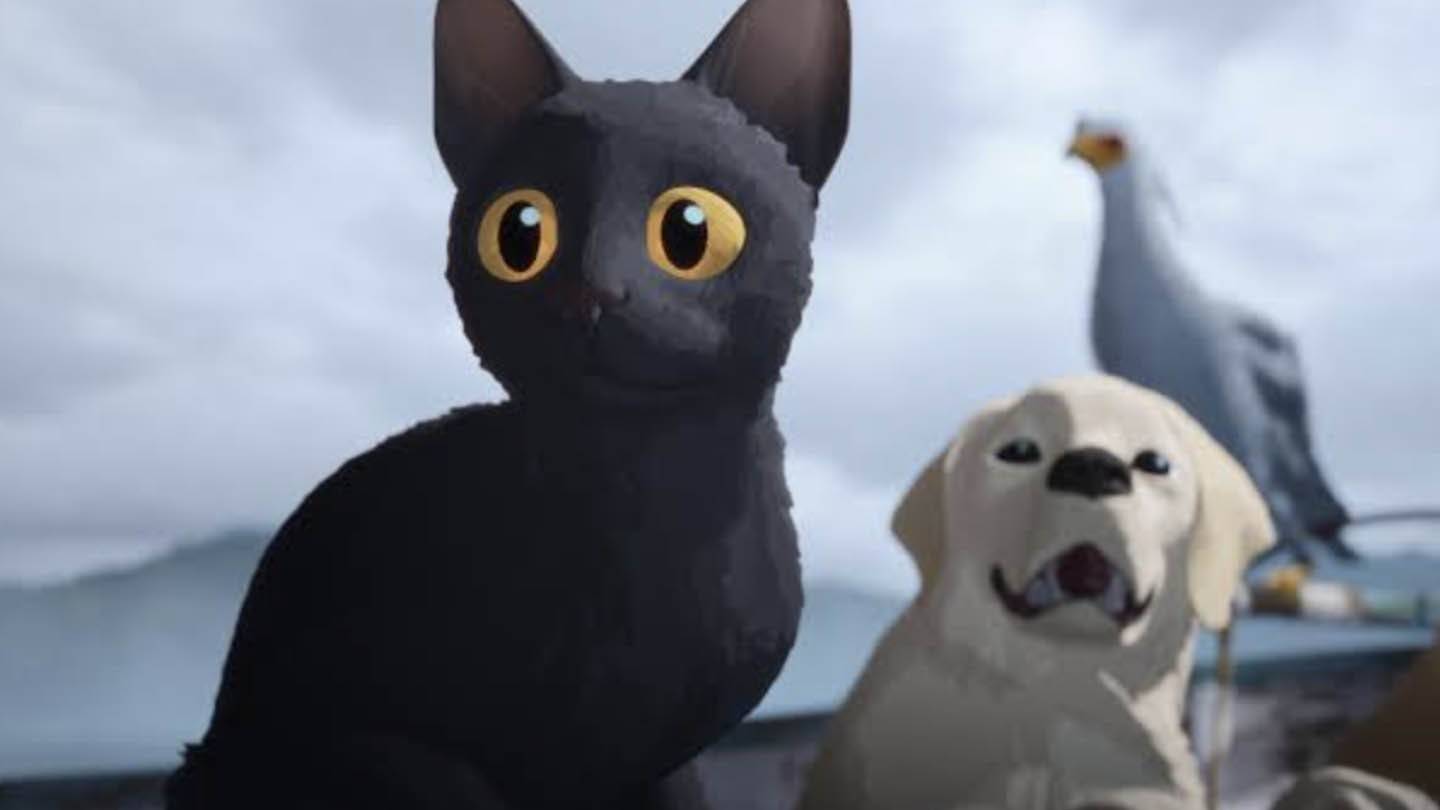 Image: ensigame.com
Critical Acclaim
Despite its modest $3.5 million budget, Flow received widespread critical acclaim. Guillermo del Toro called it "a visionary beginning for animation's future," Bill Hader declared it "the best film of 2024" (despite a cat allergy!), and Wes Anderson praised its "absolute uniqueness and wild excitement." Flow's success showcases how creative vision and innovative techniques can overcome budgetary constraints to achieve global artistic recognition.
 Image: ensigame.com
-
 Dec 25,24Zenless Zone Zero 1.5 Update Preview Zenless Zone Zero Version 1.5 Update: Leaked Banner Characters Revealed New leaks for Zenless Zone Zero unveil the character lineup for the upcoming Version 1.5 update, including highly anticipated character reruns. This HoYoverse action RPG continues to expand its roster of powerful characters, fr
 -
 May 06,25Magic Chess: Beginner's Guide to Mastering Core Mechanics Magic Chess: Go Go, an exhilarating auto-battler strategy game crafted by Moonton, is deeply rooted in the vibrant universe of Mobile Legends. This game masterfully blends chess tactics with hero-based strategies, offering players the chance to craft formidable team line-ups featuring heroes from th
 -
 Apr 08,25Top Free Fire Characters 2025: Ultimate Guide Free Fire, crafted by Garena, has cemented its status as a top-tier battle royale game worldwide, amassing over 1 billion downloads on the Google Play Store and engaging millions of daily active players. Its appeal lies not only in its thrilling gameplay but also in its diverse array of characters,
 -
 Jan 18,25Roblox Grace: All Commands and How to Use Them Grace 游戏指令速查 所有 Grace 指令 如何使用 Grace 指令 Grace 是一款 Roblox 游戏,玩家需要在充满恐怖生物的各个关卡中生存。游戏极具挑战性,需要玩家快速反应并寻找对抗敌人的方法。幸运的是,开发人员添加了测试服务器功能,玩家可以使用聊天指令来简化游戏,召唤敌人,或进行游戏测试。以下列出了 Grace 游戏中的所有指令以及使用方法。 所有 Grace 指令 .revive:复活指令,用于在失败或卡住时重新进入游戏。 .panicspeed:修改计时器速度。 .dozer:召唤 Dozer 实体。 .main:进入主分支服务器。 .slugfish:召唤 S